
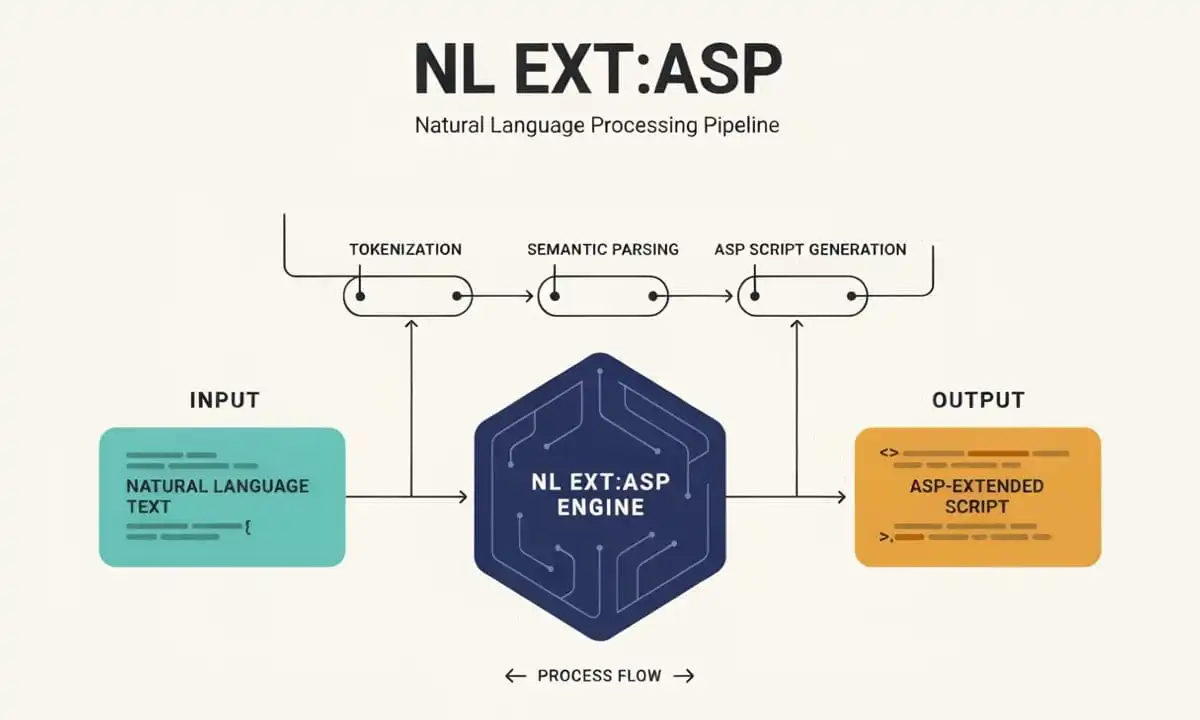
NL EXT:ASP refers to a specialized file extension or technical naming convention where natural language (NL) data files or scripts interact with Active Server Pages (ASP) frameworks. It typically designates plain-text natural language scripts, datasets, or extension modules processed within classic ASP or ASP.NET web environments to parse, transform, and serve textual content dynamically.
Understanding how file extensions like .asp interact with natural language datasets is essential for legacy web maintenance, server-side content parsing, and enterprise search indexing. While modern architectures often rely on Python or microservices for language processing, legacy infrastructure and specific enterprise Content Management Systems (CMS) still leverage server-side ASP scripting to handle custom text extensions and dynamic content delivery.
The Fundamentals of NL EXT:ASP Architecture
To grasp how NL EXT:ASP functions, it helps to examine its core components: Natural Language (NL) data handling, File Extensions (EXT), and Active Server Pages (ASP).
When a web server receives a request for a dynamic page containing natural language data, the ASP engine parses the code, evaluates embedded server-side logic, and outputs standard HTML or structured text to the client browser.
+------------------+     +-------------------+     +--------------------+
|  NL Data File    | --> | ASP Server Engine | --> | Standard HTML/JSON |
| (.asp / .nl.asp) |     | (Server Processing) |    | (Client Output)    |
+------------------+     +-------------------+     +--------------------+
Core Components Defined
Natural Language (NL): Refers to human-readable textual content, such as search queries, dynamic translations, or content templates requiring server-side parsing.
File Extension (EXT): Indicates the underlying file format and dictates which MIME type or server handler executes the file.
Active Server Pages (ASP): The server-side scripting engine created by Microsoft to build dynamic web pages using VBScript, JScript, or C# (in ASP.NET).
How NL EXT:ASP Operates in Web Environments
When an ASP script is configured to process natural language extensions, the execution follows a strict sequence on the server before transmitting results to the user.
Direct Answer: An NL EXT:ASP file functions by feeding raw textual input into an ASP server script, which applies string manipulation functions, regular expressions, or dictionary lookups to transform the data into dynamic Web content.
Key Processing Steps
Request Interception: The IIS (Internet Information Services) web server captures the incoming request containing the ASP extension.
Script Parsing: The ASP engine processes server-side code (such as
<% ... %>blocks) to parse the natural language content.Data Transformation: String functions, tokenization rules, or database calls clean and structure the natural language text.
HTML Rendering: The final sanitized output is sent back to the browser as readable text, JSON, or standard HTML.
Technical Specifications and Compatibility
Handling files with the .asp extension that contain natural language datasets requires compatible server software and text-editing tools.
| Feature | Specification Details |
| Primary Platform | Microsoft IIS (Internet Information Services) |
| Scripting Languages | VBScript, JScript (Classic ASP), C# / VB.NET (ASP.NET) |
| Supported File Encodings | UTF-8, UTF-16, ASCII |
| Default MIME Type | text/html or text/plain |
| Recommended Editors | VS Code, Notepad++, Visual Studio |
Common Use Cases for NL EXT:ASP Files
Understanding where this format appears helps developers and system administrators troubleshoot legacy web applications effectively.
1. Dynamic Content Translation and Localization
Server-side ASP scripts often load external natural language translation files based on the user’s browser language headers, outputting localized content dynamically.
2. Custom Search Query Parsing
In classic ASP web applications, natural language queries entered into a search bar are passed to an ASP handler that strips stop words, normalizes text, and queries underlying databases.
3. Automated Document Generation
Organizations use ASP-driven templates to merge raw text snippets into formal reports, emails, or dynamic web pages on demand.
How to Open, Edit, and Manage NL EXT:ASP Files
Because ASP-related files are plain-text documents containing code and language content, opening and modifying them requires only basic developer tools.
Step 1: Choose a Compatible Text Editor
Download and install a text editor that supports syntax highlighting, such as Visual Studio Code or Notepad++.
Step 2: Open the File
Right-click the target file, select Open With, and choose your designated editor.
Step 3: Verify the File Encoding
Ensure the editor is set to UTF-8 encoding. Natural language datasets often include non-ASCII or localized characters that break if saved using standard ANSI formatting.
Step 4: Test in a Local IIS Environment
To execute the server-side logic within the file, host it on a server running Microsoft IIS with ASP support enabled.
Frequently Asked Questions (FAQ)
What does NL EXT:ASP stand for?
NL EXT:ASP refers to Natural Language data processed using an Active Server Page file extension (.asp). It typically denotes textual datasets, localized language scripts, or parsing routines designed to run on Microsoft IIS web servers.
Can I open an ASP natural language file in a web browser?
Opening an ASP file directly in a web browser without a web server will only show the raw code and plain text. To execute the script properly, the file must be served through an IIS web server configured with ASP support.
Is classic ASP still secure for handling natural language inputs?
Classic ASP can be vulnerable to security risks like SQL injection and cross-site scripting (XSS) if user inputs are not properly sanitized. Modern applications should validate all natural language inputs using parameterized queries and modern security frameworks.
How do I convert an NL EXT:ASP file to modern formats like JSON or Python?
You can convert these files by extracting the underlying natural language text or logic using a text editor, then re-implementing the parsing rules into modern Python scripts, REST APIs, or JSON key-value configuration files.
Why do organizations still use ASP for natural language files?
Many enterprises maintain legacy infrastructure where rewriting legacy ASP scripts would require significant investment. Retaining existing ASP components allows established systems to continue operating reliably without expensive refactoring.